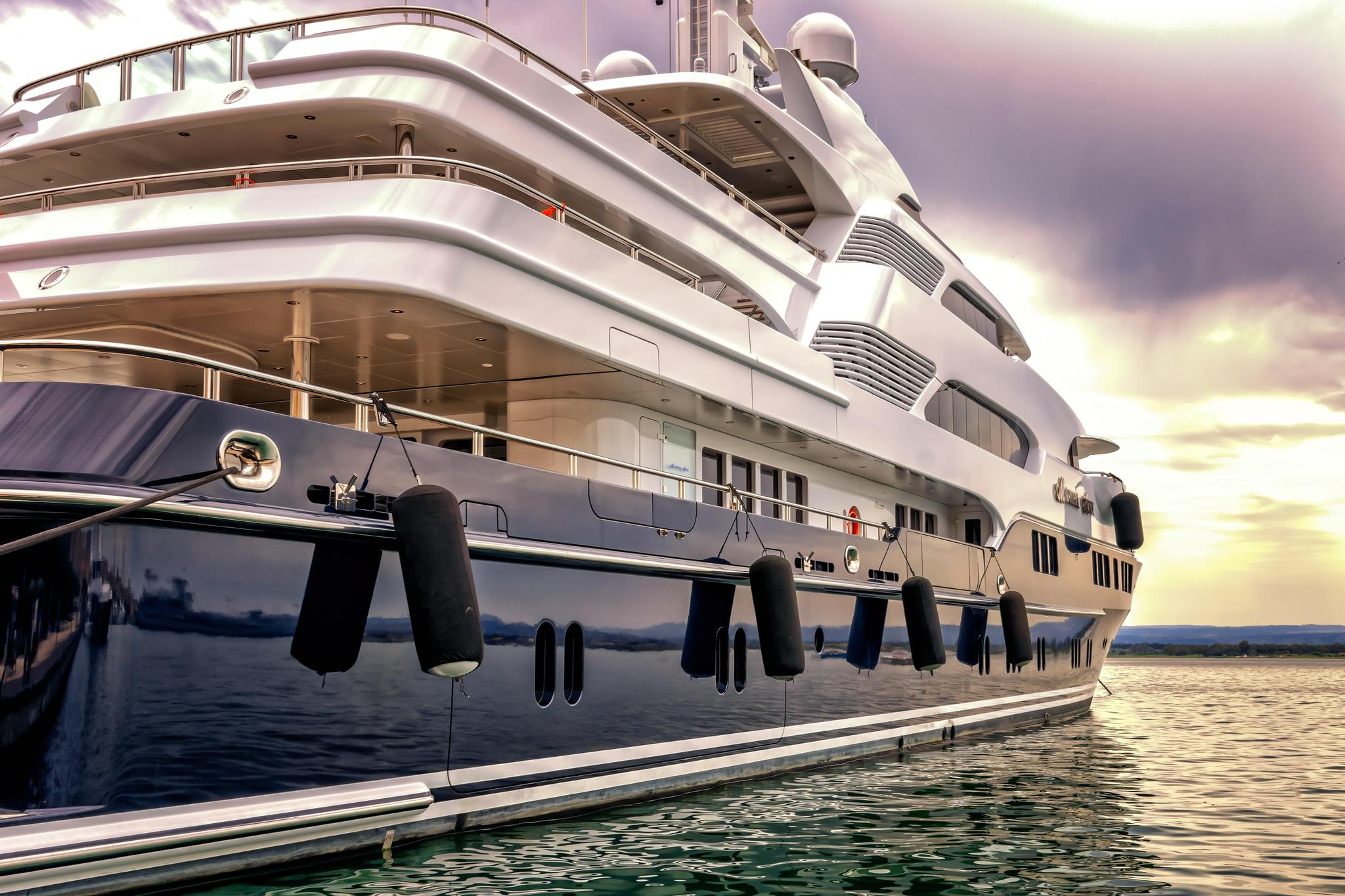
Salt fog, UV, and humidity are the three stressors that make South Florida the hardest finishing environment in the country for a yacht. Year-round sun, salt-laden air off the Atlantic, and overnight humidity that rarely dips below 60% combine to age gelcoat, teak, stainless, and canvas at roughly twice the rate you'd see in a New England or Pacific Northwest slip. Understanding what each one does is the difference between staying ahead of the damage and chasing it.
South Florida hits a yacht with UV index 10-11 from April through October, constant airborne salt, and humidity that never quits. Gelcoat oxidizes in 12-18 months unprotected. Teak grays in 60-90 days. Stainless tea-stains in a season. The three stressors don't just add together, they multiply each other's damage. Owners in Palm Beach, Broward, and Miami-Dade counties need a maintenance schedule built around year-round assault, not seasonal touch-ups.
What makes South Florida's climate so hard on yacht finishes?
Three things happen at once down here, and none of them stop. The UV index averages 10-11 from April through October, salt aerosol drifts off the Atlantic and the Intracoastal day and night, and relative humidity rarely drops below 60% even at 4 AM in February. In Newport or Seattle, UV is a summer problem and salt exposure is intermittent. In Palm Beach and Broward, the assault is year-round with no recovery window.
The stressors also multiply each other. Salt crystals left on a hull refract UV into the gelcoat at concentrated angles, accelerating photo-oxidation right where the crystal sits. Humidity traps salt particles against surfaces longer because they don't dry off and blow away. That's why a hull in Lake Worth ages differently than the same hull at the same age in a drier coastal climate.
How does UV radiation break down gelcoat and painted topsides?
UV degrades the polyester resin matrix in gelcoat through photo-oxidation. The chalky white film you wipe off an old hull is broken resin binder releasing pigment, and it's irreversible without compounding. A seven-year-old gelcoat in South Florida often looks like a ten-year-old hull in Rhode Island, even with comparable wash schedules.
Awlgrip and Awlcraft 2000 topcoats resist UV better than raw gelcoat, but they're not immune. Annual inspection and a wax or coating refresh are still the price of admission down here. Horizontal surfaces take the worst of it. A hardtop, swim platform, or cabin top receives near-perpendicular sun all day and degrades measurably faster than the vertical topsides three feet away.
What does salt fog actually do to a hull between washes?
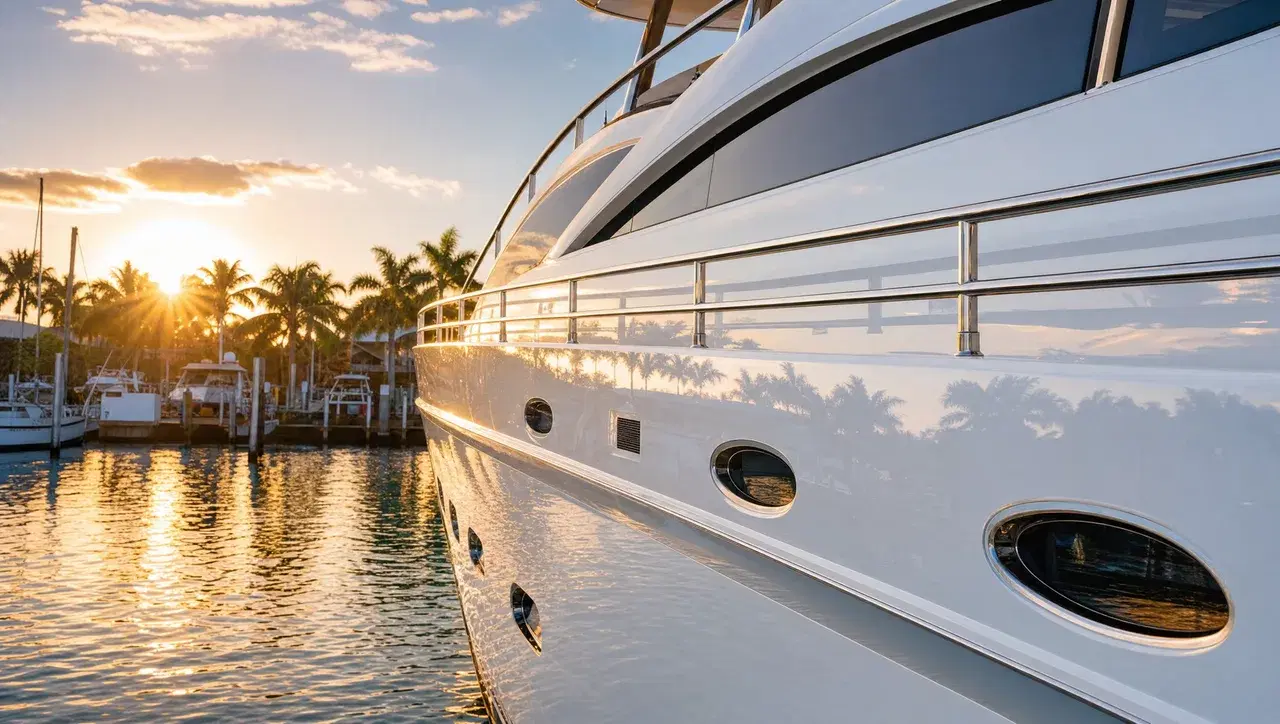
Salt aerosol from breaking waves and boat wake deposits fine sodium chloride crystals on every exposed surface. When the moisture evaporates, the crystals concentrate. Now you've got abrasive, hygroscopic particles sitting on gelcoat, stainless, and canvas, pulling moisture back out of the air and holding it against the surface. That's the whole problem in one sentence.
On unprotected aluminum cleats and fittings, chloride corrosion pits the metal in roughly six months of continuous exposure without rinsing. Salt accumulation under canvas covers and in teak seam caulk accelerates caulk cracking and teak checking. The seam opens, more salt gets in, the process compounds. A 58' Hatteras docked at Sailfish Marina near the Lake Worth Inlet sees a heavier salt load than the same boat tied up several miles back on a protected canal in North Palm Beach. Location within South Florida matters more than most owners realize.
How does high humidity speed up mildew, staining, and corrosion below deck?
Interior humidity in summer stays high enough that mold spores colonize headliner foam, upholstery backing, and bilge insulation within weeks if the air stops moving. Close up a 52' Viking in a Fort Lauderdale slip with no dehumidifier running, walk away in June, come back in September. You'll find visible mildew staining on the vinyl headliner and a smell that takes professional Interior Detailing to chase out of the fabric.
Electrical connections corrode faster than ABYC standards anticipate in a humid bilge. Green patina on terminal blocks is a routine finding, not an unusual one. Teak and holly sole and cabinetry expand and contract with the humidity cycle, loosening joinery and opening gaps where moisture can settle in and stay. For more on marine electrical and environmental standards, ABYC publishes the recognized references most surveyors work from.
Which surfaces degrade first and how fast should owners expect it?
Unprotected gelcoat with no wax or coating typically shows measurable oxidation within 12-18 months in South Florida conditions, with perceptible chalking by year two on light-colored hulls. Dark hulls show it sooner because the surface temperature runs hotter. Bare teak on a transom or cockpit sole begins graying within 60-90 days if it's left unsealed through a summer.
Canvas Sunbrella fading and mildew staining usually show up in the second season. Raw canvas without UV treatment can show structural weakening, not just cosmetic damage, by year three. Stainless 316-grade fittings begin tea-staining (surface rust from chloride pitting in the steel's protective layer) within a single season if they're not polished and waxed routinely. None of these timelines are worst-case. They're typical.
What maintenance frequency actually keeps up with South Florida conditions?
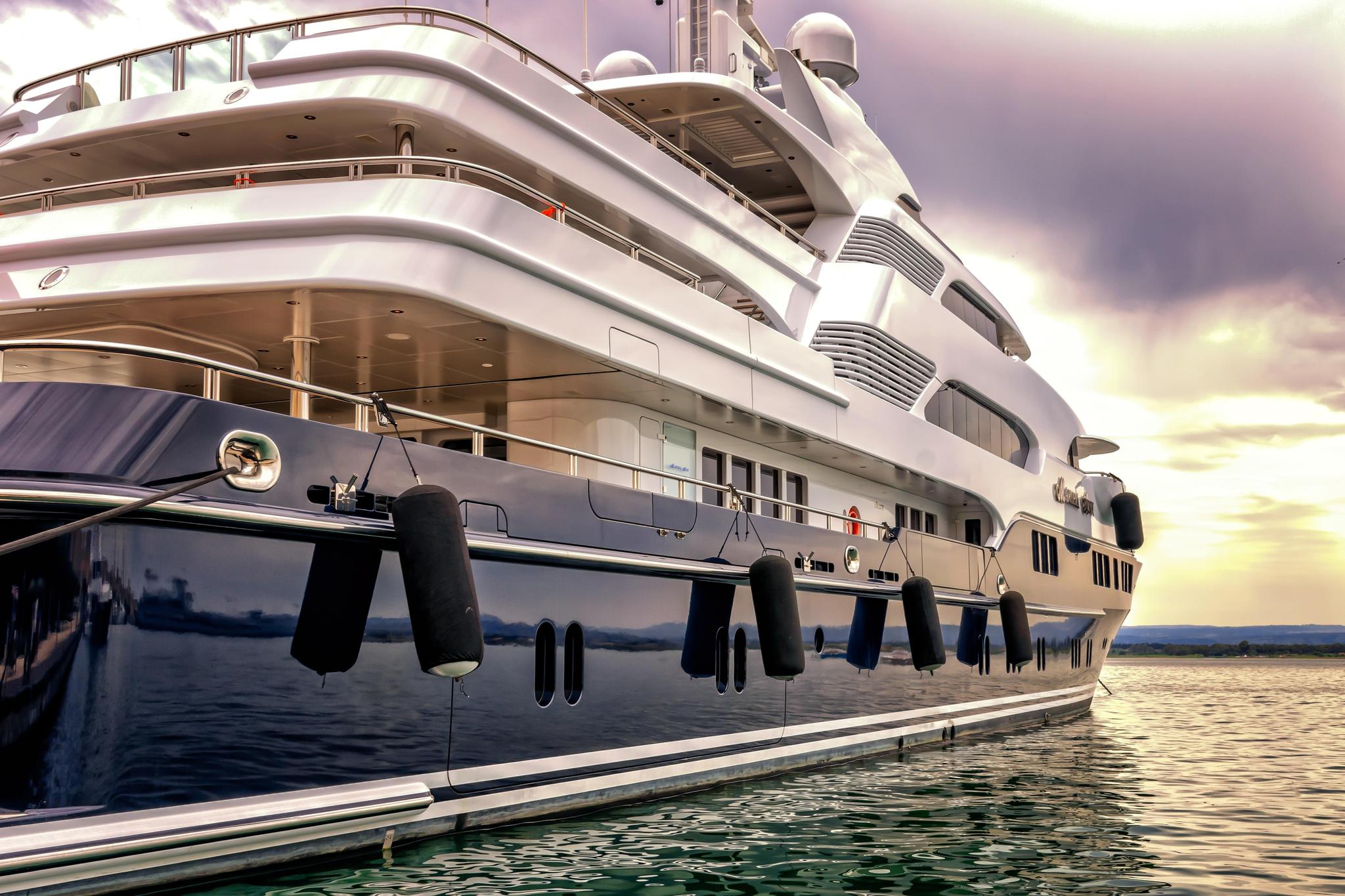
Wash schedules built for the Chesapeake don't survive here. Here's what works:
- Exterior wash with a thorough fresh-water rinse: monthly at minimum, biweekly for vessels on open slips or near inlets with heavy salt load. A Monthly Wash Program is the floor, not the ceiling.
- Wax or sealant re-application: every 90 days on raw gelcoat. A properly applied Ceramic Coating typically extends that interval to 12 months, but you still want quarterly inspection washes to verify the coating is holding.
- Teak cleaning and sealing: twice yearly minimum, with quarterly light scrubbing to keep gray oxidation and black mold from setting into the grain.
- Interior dehumidification: a 70-pint or larger unit running continuously during the wet season, May through October. On a closed-up vessel in Broward or Miami-Dade, this isn't optional.
The frequency hurts the first time you read it. It's the price of keeping a boat looking right in this climate. The owners who try to stretch a quarterly wash schedule end up paying for Gelcoat Correction at $25-$45 per linear foot of hull two years later, which buys a lot of washes.
When should owners call a professional detailer instead of maintaining themselves?
DIY makes sense for a lot of this work. Washing, light teak scrubbing, basic stainless polishing, mildew wipe-downs on vinyl with a Mr. Clean Magic Eraser used carefully. Where it stops making sense is anywhere a rotary polisher enters the picture.
Gelcoat Correction on a heavily oxidized hull requires the right pad and compound selection (typically a wool cutting pad with 3M Perfect-It Compound for the first cut, stepping down to foam and Perfect-It Polish), correct rotary speed, and the experience to read the finish under your hand. DIY attempts on a chalked-out 60' Sea Ray often cut through to the laminate at the chines or leave holograms that need professional re-correction. Ceramic Coating is even less forgiving. The surface has to be decontaminated and flash-time managed correctly, and South Florida's heat and ambient moisture punish first-time applicators.
Any time a wash reveals visible osmotic blistering, delamination, or crazing, stop and get a qualified marine surveyor involved before you put any product on the surface. Hull Renew, LLC handles Gelcoat Correction, Ceramic Coating, Teak Care, and the Monthly Wash Program across Palm Beach, Broward, and Miami-Dade counties. We're family-owned, firefighter-owned, and we work to superyacht-grade standards on every vessel regardless of size.
Frequently asked questions
How much faster does gelcoat oxidize in South Florida compared to northern climates?
In our experience, roughly twice as fast on unprotected hulls. A gelcoat that would still look acceptable at year seven in a New England slip will typically show chalking and dullness by year three or four down here, especially on horizontal surfaces and dark-color hulls. The combination of year-round UV and continuous salt exposure is what closes the gap.
How often should I wash my yacht if it's docked near an inlet in Palm Beach County?
Biweekly is the realistic floor for a vessel near Lake Worth Inlet, Boynton Inlet, or any open exposure. Salt deposition near an inlet is heavy enough that monthly washing leaves crystals on the gelcoat long enough to do real cumulative damage. A proper rinse, soap wash, and chamois dry every two weeks is what keeps the finish ahead of the salt.
What is the first visible sign that UV damage is becoming a serious problem on my hull?
A faint chalky residue on your hand after you run a clean palm down the topsides. That's resin binder breaking down and releasing pigment, and it means the gelcoat's protective layer is gone. You'll usually see it on horizontal surfaces and sun-facing sides first. Catch it at that stage and a polish and seal will recover the gloss. Wait another year and you're looking at full Gelcoat Correction.
Why does teak gray so quickly in South Florida even after I've just had it cleaned?
Cleaning teak strips the surface oils that gave the wood its honey color, and a South Florida summer pulls more oil out within weeks if the wood isn't sealed. Year-round UV, humidity cycling, and salt all attack raw teak simultaneously. The fix is to follow a cleaning with a quality sealer applied to dry, cured wood, and to plan on a light maintenance refresh every three to four months.
Does a ceramic coating actually protect against salt fog and humidity, or just UV?
A properly applied ceramic coating helps with all three. It creates a hydrophobic, chemically resistant layer that beads salt water off rather than letting it sit and crystallize, blocks a significant portion of UV from reaching the underlying gelcoat, and resists mildew adhesion on the exterior surfaces it covers. It's not invincible and it doesn't replace washing, but it's the single biggest upgrade most South Florida owners can make to slow finish degradation.
Get a Yacht Detailing Quote
Find out what professional detailing would cost for your yacht with a free assessment from the Hull Renew team.
Get a Free Quote